The Vanity Number Checklist: What to Check Before You Buy
July 28, 2026
"Available" Isn't the Same as "Good"
Punch a search box on almost any carrier site and you'll get a wall of numbers marked "available." That word is doing a lot of work it hasn't earned. Available just means nobody's paying for it right now — it says nothing about whether the number will actually help your business.
Before you commit to one, it's worth running it through a short, concrete checklist. None of these checks take more than a minute, and skipping any one of them is exactly how a business ends up stuck with a vanity number that looked clever on a spreadsheet and confusing on a business card.
Do the Keypad Math First
Every vanity number lives or dies on one mechanical fact: which letters actually sit on which digit. Most phone keypads skip Q and Z entirely, and the digit 1 has no letters at all — so a word that needs either one won't work no matter how good it looks written down.
Map the word out digit by digit before you fall in love with it:
- Length match — the word (or the part of it you're using) needs to land in exactly seven digits, or fit cleanly into the last seven of a toll-free block. A word that's six letters forces an awkward extra digit; one that's eight gets truncated somewhere ugly.
- No Q or Z — check every letter against a real keypad, not from memory. These two are the most common reason a "perfect" word turns out to be unbuyable.
- Ambiguous middle letters — a key like 6 covers M, N, and O. If your word could plausibly be read as two different real words depending on which letter someone assumes, you've built in confusion instead of removing it.
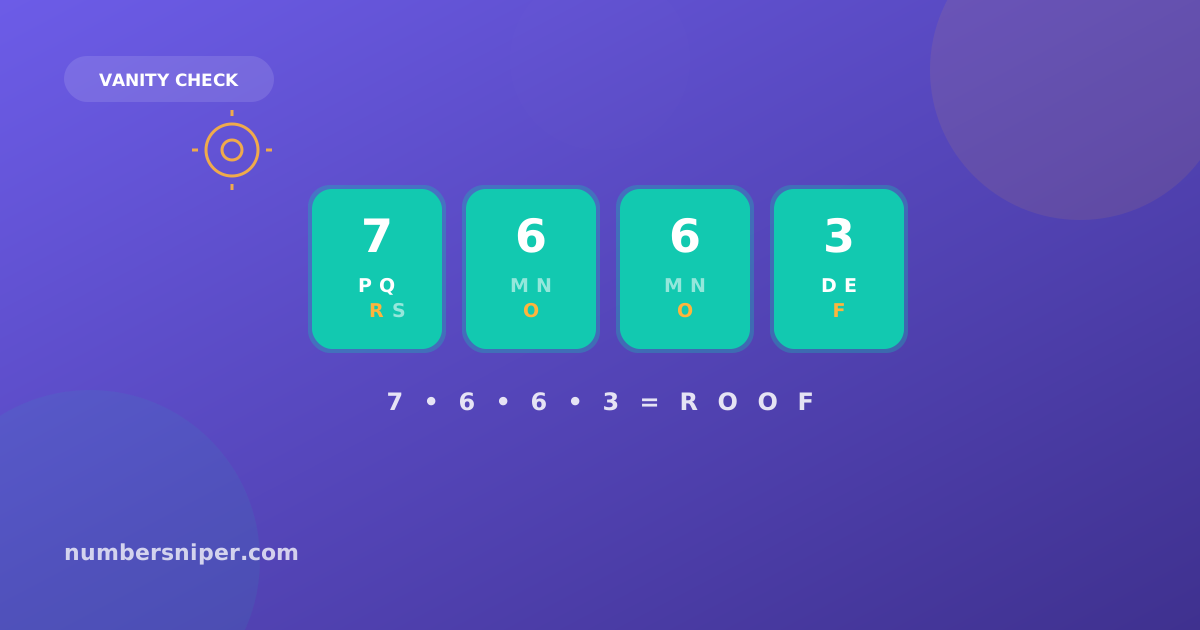
A roofing company chasing ROOF, for example, is really buying the digit sequence 7-6-6-3 — and that only helps if a number ending in those digits actually exists as purchasable inventory in the area code they want, not just as a theoretical keypad match.
Match the Number to Where You Actually Do Business
A memorable number with the wrong area code just adds a second thing customers have to double-check. If you're a local plumber, roofer, or law office, a number carrying your own area code signals "we're actually here" in a way a toll-free number can't. If you're building a national brand, toll-free (800/833/844/855/866/877/888) is the more honest choice — it doesn't pretend to be local, and callers don't expect it to be.
Don't split the difference by picking a vanity toll-free number for a business that only ever answers calls from three ZIP codes. Customers notice the mismatch even when they can't quite say why.
Run the Conflict Check Nobody Runs
A vanity number is a brand asset. Treat it like one before you buy it, not after.
Search the exact word your number spells alongside your industry and your metro area. If a competitor, a defunct business, or an unrelated company already owns that word in the public's ear, you're not getting a fresh memorable number — you're borrowing someone else's, and every misdial is a customer accidentally calling them instead of you.
This takes five minutes and a search engine. Most businesses skip it because they're focused on whether the number is available, not on whether it's actually theirs to claim.
Why the Good Ones Disappear Before You See Them
Here's the part manual searching doesn't tell you: carrier inventory turns over constantly. A number gets released when someone cancels service, a business closes, or a block gets recycled back into the pool — and the moment that happens, automated buyers are already watching for it. By the time a clean vanity match shows up in a manual search on a carrier's own site, it's frequently already gone.
That's the gap our engine is built to close. It watches area codes around the clock, checks every newly available number against real keypad-word matches and pattern scoring the instant it appears, and grabs the ones worth having before a human would ever see the listing. What lands in the catalog has already survived the checks above — length, spelling, and pattern quality — so you're choosing from numbers that already passed, instead of doing the filtering yourself against a carrier's raw leftovers.
Test It Before You Buy It
Once a number passes the checklist, say it out loud to three people who've never seen it written down. Read it as a phone number, not as a word — "seven-six-six-three... ROOF" isn't the same test as showing someone the word ROOF on a screen. If two of the three repeat it back correctly from hearing it once, it's a keeper. If they hesitate or guess a different word, it's not ready yet, no matter how good the keypad math looked.
Browse today's catalog to see live vanity and pattern matches that have already cleared these checks — a fresh batch gets sniped every day.